All Categories
Featured
Table of Contents
Working with a marketing group abroad used to be a basic cost choice. In 2026, it is not. Nearshore and overseas designs have diverged substantially in how they carry out, what they cost, and what type of work they manage well. This guide breaks down the genuine differences so you can select the ideal model before you commit to a structure that slows you down.
Work takes place in genuine time, cooperation is concurrent, and cultural positioning tends to be stronger. Offshore marketing suggests employing across a considerable time distinction, often 8 or more hours.
LATAM nearshore talent provides English proficiency, strong cultural alignment with U.S. markets, and coverage throughout SEO, material, paid media, and brand name method, making it a natural fit for U.S
An offshore marketing team delivers depth and performance at scale. Done right, offshore manages production while nearshore leads technique and iteration.
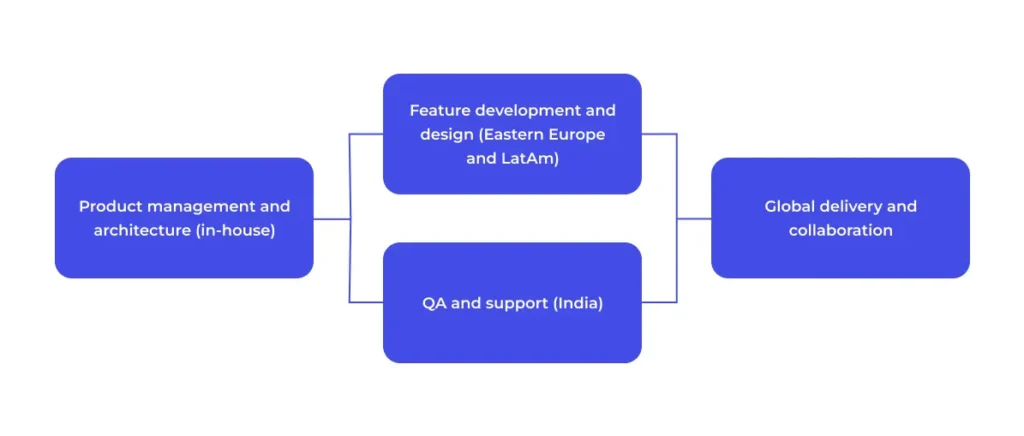
marketsVaries significantlyCost vs. U.S. hire40-60% lower60-75% lowerBest forBrand, method, iterationScale, production, volume Nearshore teams work your hours, which speeds up approvals, imaginative pivots, and live performance triage. Offshore groups carry out well however count on planned syncs and paperwork. Lots of online marketers pair nearshore for collaboration-heavy work with offshore for over night production sprints.
Will Firms Move to Nearshore Centers in 2026?
Offshore teams bring fresh perspectives and scale however require more upfront brand onboarding. Offshore rates are normally lower, which extends spending plans for multi-channel programs. Pick offshore when your procedures are recorded, your briefs are tight, and you require volume at the lowest possible expense.
Which roles compose or speak in your brand voice directly, and which work behind the scenes on information and tooling? What budget plan and hiring flexibility do we require over the next 2 quarters? Scale Army sources, vets, and places junior-to-senior talent lined up to U.S.
Most clients a lot of candidates within prospects week and make a hire within 14 days, at 40 to 70 percent below U.S. listed below costsEmploying
Building a GCC Strategy for America
Pros and cons of nearshore outsourcing Why nearshore works Real-time partnership is the default, not a workaround Most software application work in 2026 is constructed around multidisciplinary Agile teams running on cooperation, version, and short feedback loops. Shared workday hours are not a nice-to-have for this style of work, they're the underlying condition that makes it operate at all.
The talent pool keeps growing Latin America's engineering talent pool has grown materially much faster than the similar onshore market over the last five years. Costa Rica, Colombia, Argentina, Mexico, Brazil, and Chile have actually all constructed deep benches of senior engineers, and the supply continues to outpace U.S. growth in the exact same ability categories.
Nearshore has those conditions built-in. A standard 812 person nearshore team running GenDD becomes a 3-person Pod providing the same work.
Travel is truly workable A flight from Atlanta to San Jos, Costa Rica is much shorter than a flight to San Jose, California. Same-day big salami are practical from the majority of U.S. center airports. This matters less than it used to in a post-pandemic world, however when in-person work is needed, the friction is low.
Some overseas engagements deliver real cost savings if the workload endures async-first collaboration. The honest comparison consists of the coordination tax and quality variation that come with the overseas rate, however the rate is real. Language and culture are close, not identical English efficiency is strong throughout senior LATAM talent, however it is a second language.

Latest Posts
Comparing Offshore and US Centers
Evaluating Nearshore and Local Centers
Why Labor Market Dynamics Shape GCC Strategy in 2026